top of page
Haan Lab
Insect ecology, management, and conservation

IMG_7889_edited


IMG_7889_edited
1/4
Acerca de
Diverse research interests in arthropod ecology, conservation, and management. I'm most excited about exploring the intersection of biodiversity conservation, ecosystem services, and agricultural sustainability.
-
Research Associate Michigan State University 2018-2022
-
Research Associate University of Washington 2017-2018
-
PhD University of Washington, 2017
-
MS University of Michigan 2010
Google scholar

Nate Haan
Principal Investigator + Assistant Professor
Colby Grant
PhD student // Lab Tech Senior 2023 -
My research examines how changes in agroecosystems influence arthropod communities and their ecosystem services. Using ants as model organisms, I study the effects of invasive pests and evolving agricultural management practices. My goal is to provide foundational ecological knowledge to help develop IPM strategies that promote biodiversity conservation and agricultural productivity. I am passionate about scientific outreach and frequently collaborate with UK Cooperative Extension & KY OSE. My work aims to make scientific research accessible by fostering awareness of ecological interactions and ecosystem services.
-
BA Transylvania University 2022

Holly Myers
PhD Student 2023 -
I am broadly interested in how ecotoxicological pressures impact organisms, biodiversity, and ecosystem functionality at a landscape scale. Specifically, my research investigates how pasture management and the use of veterinary compounds impact insect communities within and surrounding pasture agroecosystems.
-
BS Washington College 2023

Madison Kluge
MS Student 2024 -
Entomology, conservation biology, and ecology are at the heart of my research interests. Dung beetles offer insight into ecosystem health as bioindicators. Their ecological functions, such as dung burial and bioturbation, are important on pastureland, where livestock spend a lot of time eating, and most importantly for my work, pooping! Unpopular visitors like flies and nematodes use this dung resource, resulting in population spikes that negatively impact livestock health. Many producers rely on parasiticides to manage pest and parasite populations, which are often indirectly released into the environment. These contaminants can harm beneficial, non-target invertebrates like dung beetles, disrupting ecological processes and entire ecosystems. Through my master’s work, I study dung beetle foraging behavior, reproductive success, and fitness to understand how agricultural practices, particularly the use of parasiticides, shape insect communities.
-
BS Catawba College
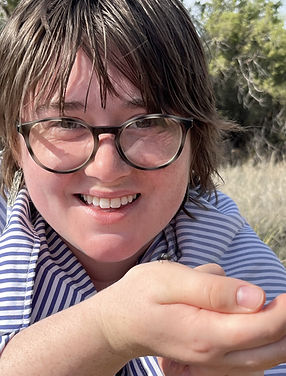

Taylor Kennedy
PhD Student 2025 -
My research interests are in insect conservation ecology, specifically how insect movement and interactions shape ecosystem services, landscape connectivity, and biodiversity in both natural and agroecosystems.
-
MS Montana State University
-
BS North Carolina State University
Erin Harper
Undergraduate Student 2025 -

Alumni
Jamie Shepherd - Summer technician 2025
Scott Bessin - Research Analyst 2022-2023
bottom of page